Butt Kicks Exercise
A running-in-place cardio exercise where you kick your heels up toward your glutes — effective for warming up hamstrings, elevating heart rate, and improving running mechanics without leaving your home.
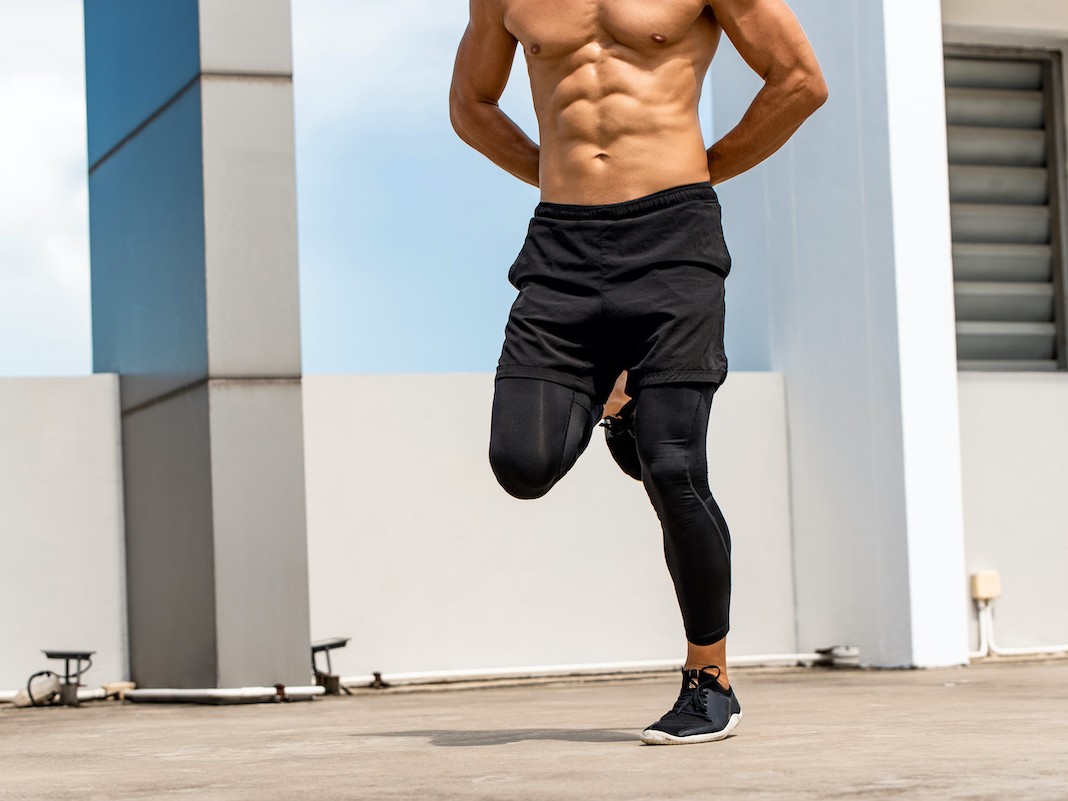
How to Do It
- 1Stand with feet hip-width apart
- 2Jog in place, kicking heels up toward glutes
- 3Aim to touch heels to glutes with each kick
- 4Keep upper body upright, slight forward lean
- 5Pump arms in jogging motion
- 6Land on balls of feet
- 7Maintain quick, continuous rhythm
- 8Keep core engaged throughout
How Many Calories Do Butt Kicks Burn?
Butt kicks burn calories at a moderate rate consistent with light cardio activity — more than walking, less than running. The exact amount depends on your weight, intensity, and duration. Use our free Calories Burned Calculator to find your specific number.
Calculate Your Calories Burned →Common Mistakes to Avoid
Make It Easier
- Slower tempo
- Lower heel kicks
- Alternating single kicks
Make It Harder
- Faster tempo
- Forward movement
- Butt kicks with high knees combo
Why Butt Kicks Are More Useful Than They Look
Butt kicks look simple — and they are. That simplicity is exactly why they get overlooked by people chasing more complex movements. But the exercise does several things simultaneously that make it genuinely valuable regardless of fitness level. First, it dynamically stretches and warms up the hamstrings through active movement rather than static holding — which research consistently shows is more effective for pre-workout preparation than static stretching. Second, it trains the hip flexors to drive the knee forward rapidly while the opposite hamstring contracts to pull the heel up — a movement pattern that directly transfers to running, cycling, and any lower-body athletic activity. Third, it elevates heart rate quickly without significant joint impact, making it one of the most accessible cardio warm-up tools available. Research confirms butt kicks are a key running drill that may help increase the speed of hamstring contractions, improving running efficiency and reducing injury risk. For anyone starting a home workout without a treadmill or stationary bike, a 60-second set of butt kicks is one of the fastest ways to get the cardiovascular system engaged before strength work begins.
Butt Kicks After 40 — Low Impact Cardio That Actually Works
High-impact cardio — running, jumping, box jumps — becomes progressively harder on joints after 40 as cartilage thins and recovery slows. Butt kicks occupy a useful middle ground. At a controlled tempo they are genuinely low impact — both feet never leave the ground simultaneously if you slow the movement to a march-like pace — making them accessible on days when jumping or running feels too demanding on the knees or hips. At a faster tempo they provide a meaningful cardiovascular stimulus without the ground reaction forces of true running. This flexibility makes butt kicks particularly valuable for adults over 40 as a warm-up tool, as active recovery between strength sets, or as a low-impact alternative on days when the body needs lighter work. They are also useful for anyone returning to exercise after a lower-body injury who needs to reintroduce hamstring activation and cardiovascular load gradually — at any age.
Frequently Asked Questions
What muscles do butt kicks work?
Butt kicks primarily work the hamstrings — the muscles along the back of the thigh — which contract to pull the heel toward the glutes with each repetition. Secondary muscles engaged include the hip flexors which drive the knee forward to initiate each stride, the quadriceps which control the lowering phase, the calves which facilitate toe-off and landing, and the core which stabilizes the torso throughout. The cardiovascular system is significantly engaged, making butt kicks both a muscular warm-up and a cardio exercise simultaneously.
Are butt kicks good for losing weight?
Butt kicks contribute to weight loss as part of a broader exercise and nutrition plan. As a moderate-intensity cardio exercise they burn calories at a moderate rate consistent with light cardio activity — more than walking, less than running — and elevate heart rate, both of which support a calorie deficit when combined with appropriate nutrition. They are not a standalone weight loss solution, but as part of a consistent routine they provide real cardiovascular benefit, particularly for individuals who cannot perform higher-impact exercises due to joint sensitivity.
How long should I do butt kicks?
For warm-up purposes 30–60 seconds is sufficient to elevate heart rate and activate the hamstrings before a workout. For cardiovascular conditioning perform 3–5 sets of 45–60 seconds with 15–30 seconds of rest between sets. For use as active recovery between strength exercises 20–30 seconds at a controlled pace is appropriate. Total duration depends on your fitness level and how butt kicks fit within your broader workout structure.
What is the difference between butt kicks and high knees?
Butt kicks and high knees are complementary exercises that work opposing muscle groups. Butt kicks emphasize the hamstrings and posterior chain — the back of the leg — by driving the heel toward the glutes. High knees emphasize the hip flexors and quadriceps — the front of the leg — by driving the knee toward the chest. Performing both in sequence provides a complete lower-body dynamic warm-up that activates both the anterior and posterior chain before training or athletic activity.
Can I do butt kicks with bad knees?
At a slow controlled tempo butt kicks are generally suitable for individuals with mild knee sensitivity because the movement does not involve jumping or significant ground impact. The key modification is to reduce speed — slow the movement to a walking pace where one foot is always in contact with the ground, eliminating any impact entirely. This creates a low-impact hamstring activation exercise suitable for most knee conditions. If you experience pain during the movement regardless of speed, discontinue and consult a healthcare professional.
Are butt kicks good for runners?
Yes — butt kicks are a standard warm-up drill in running training programs because they directly rehearse the hamstring contraction pattern used in running. Research confirms the movement trains the hamstring to fire rapidly and powerfully, improving stride efficiency and reducing hamstring strain risk. Most running coaches recommend butt kicks as part of a dynamic warm-up routine performed immediately before runs, particularly for interval or speed training sessions.
Quick Stats
Perfect For
Helpful Fitness Tools
Plan your training and nutrition for better results: